

Shaping a UN Convention That Changes Lives: The Choices Before Us
A UN Convention on the Human Rights of Older Persons is taking shape. But what kind of Convention will it become -and what difference will it make in people’s lives?
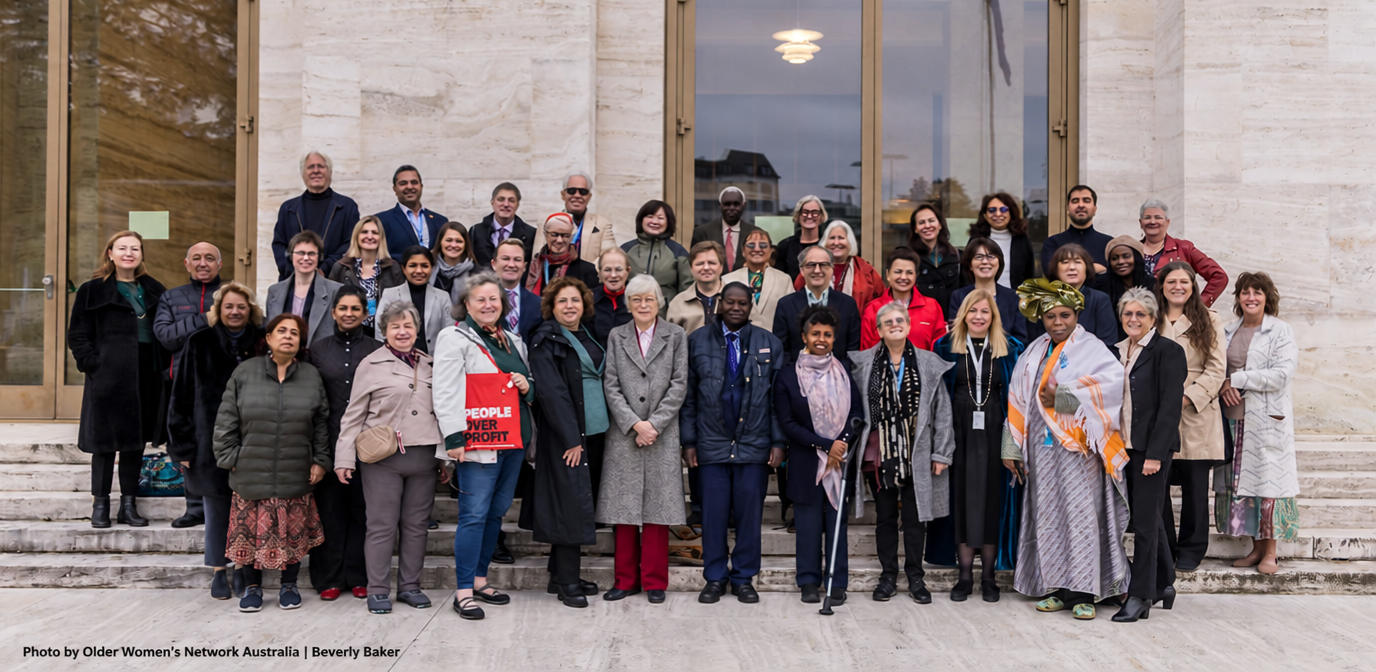
These questions came into sharper focus at the October 2026 session of the UN Intergovernmental Working Group (IGWG) on the Human Rights of Older Persons. Held in Geneva from 26–30 October, the session brought Member States together to discuss the Convention’s essential components. More than 150 representatives of civil society organisations and national human rights institutions also participated. National human rights institutions are independent bodies that promote and protect human rights.
Member States’ interventions revealed areas of common ground as well as important differences. The themes explored below do not capture every position expressed. Nevertheless, they offer a starting point for understanding the choices ahead. The challenge now is to work through these differences and translate shared aspirations into substantive rights, clear State obligations and lasting change in older persons’ lives.
The next phase will determine how the Convention builds on existing human rights commitments. Above all, the choices ahead must advance meaningful change in the recognition, exercise and full enjoyment of rights in older age.
Drawing on these discussions, Age Knowble reflects on what emerged and the choices still to be made. We also consider how everyone can contribute to shaping the Convention.
What Emerged — And What Still Needs to Take Shape
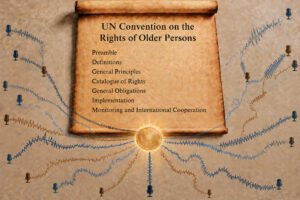
Photo by Age Knowble | Canva AI
Preamble — Establishing Purpose and Vision
Why do we need a dedicated Convention, and what should it seek to change?
Member States broadly recognised that human rights belong to everyone throughout life. Yet ageism, discrimination and protection gaps continue to undermine their enjoyment in older age. Their interventions also emphasised older persons as rights-holders, not simply recipients of care or assistance.
Beyond explaining why a dedicated Convention is needed, the Preamble should recognise older persons’ diversity and inequalities accumulated throughout life. It should also challenge assumptions that define older persons primarily by their needs.
Ultimately, the Preamble offers an opportunity to establish a shared vision of the transformation the Convention seeks to achieve. That vision is of societies where everyone can grow older with rights, dignity and self-determination.
Definition of Older Persons — Recognising Diversity Beyond Age Thresholds
Who should the Convention cover, given that older age is experienced differently across societies?
There was general agreement that a single universal age threshold would not reflect the diversity of ageing across countries and societies. However, views were more mixed on defining an older person through a social construct. This approach recognises that who is considered an older person can vary across societies and cultures.
The opportunity, therefore, is to explore how this approach could contribute to an inclusive, legally workable definition. At the same time, countries could still set age thresholds for specific national laws, policies and programmes.
The choice matters. A definition must clarify whom the Convention covers while recognising diverse realities of older age. It must also avoid reinforcing stereotypes or excluding people from its guarantees.
General Principles — Giving the Convention a Coherent Foundation
What values and commitments should guide the entire Convention? And how will they work in practice?
Member States raised principles including dignity, equality and non-discrimination, autonomy, independence, self-determination, meaningful participation and intergenerational solidarity. Discussions also highlighted older persons’ diversity and experiences of intersecting discrimination. This occurs when age discrimination combines with other forms of discrimination, such as those based on gender or disability.
But a list of principles, however compelling, is not enough.
General Principles need clear definitions and a coherent structure to guide the Convention’s development, interpretation and application. They should recognise older persons as individual rights-holders, the environments in which they exercise their rights, and the systems that enable or hinder their enjoyment.
For example, self-determination should guide how the Convention defines rights. It should also guide decisions affecting older persons in everyday life.
Without such a foundation, different parts of the Convention risk inconsistent interpretation or application. Well-designed General Principles can therefore help address difficult questions and guide rights and obligations. They can also keep the Convention responsive to changing realities, emerging challenges and new possibilities in older age.
Member States, Older Persons, Civil Society and National Human Rights Institutions. Photo by Age Knowble.
Catalogue of Rights — Making Rights Meaningful in Older Age
What should the Convention say about the rights older persons are entitled to enjoy and exercise?
Member States affirmed the importance of preserving existing human rights guarantees. Discussions addressed equality and non-discrimination, autonomy and legal capacity, health and care, social protection, participation, access to justice, and protection from violence and abuse.
Beyond the rights discussed, the Catalogue must encompass all human rights and fundamental freedoms, including those recognised and further developed since the two International Covenants, without weakening existing standards.
The challenge, therefore, is not simply to name rights. The Convention must clarify what they mean in older age, adapt and strengthen them where existing standards fall short, and recognise additional guarantees or new rights where warranted.
Crucially, the Convention must establish older persons’ legal entitlements and corresponding State obligations. These are distinct from the policies and programmes governments may use to fulfil them.
General Principles should also guide how the Convention formulates and interprets these rights. Meanwhile, older persons’ lived experiences can help identify where existing guarantees need strengthening.
General Obligations — Turning Commitments into State Responsibilities
What must governments actually do to make rights a reality?
Member States emphasised tackling age discrimination and translating Convention commitments into national laws, policies and practices. However, different views emerged on the responsibilities of States, families and caregivers. Participants also raised concerns about resources and implementation.
The central choice is whether State obligations will remain broad commitments or require action on the systems and practices that undermine rights.
This means addressing ageism and discrimination embedded in laws, institutions and everyday practices. It also means tackling inequalities that build up throughout life. In addition, governments need coordinated action across all areas of public policy. States must also take measures to prevent, address and remedy rights violations involving businesses, service providers and other non-State actors.
Families and caregivers play important roles. However, State obligations should not be transferred to them. The Convention must distinguish obligations that take effect immediately from those realised progressively. It must also ensure equitable use of resources and safeguard existing rights.
To keep protections effective over time, States should regularly review emerging issues and protection gaps. States should assess whether existing rights and measures remain adequate, and strengthen protections or develop new ones where warranted.
Ultimately, State obligations must change the conditions that prevent older persons from exercising their rights. Older persons must also have a meaningful role in shaping and assessing those changes.
Implementation, Monitoring and International Cooperation — From Commitments to Change
How will we know whether the Convention is making a difference—and what happens when it is not?
Member States recognised the importance of national implementation, monitoring and accountability. Developing countries in particular raised resource and capacity constraints. These concerns, in turn, highlighted the importance of international cooperation through technical assistance, knowledge exchange, capacity-building and financial support.
The opportunity is to design arrangements that do more than track compliance. They should identify barriers, strengthen accountability and prompt action that improves the enjoyment of rights.
This calls for effective national arrangements and meaningful involvement of older persons. Monitoring should also be efficient and proportionate. It should build on existing mechanisms and good practices, avoid unnecessary duplication and allow room for innovative approaches as needs evolve.
International cooperation is equally essential to helping countries overcome resource and capacity barriers and fulfil their obligations.
Ultimately, success is not measured on the number of reports submitted or commitments announced. Rather, it should depend on improvements in older persons’ enjoyment of rights.
Bringing the Components Together — Building a Convention That Works
The Convention’s effectiveness depends not only on the strength of its individual components, but also on how they work together.
The Preamble establishes the Convention’s purpose, while definitions clarify its scope. General Principles then guide its development, interpretation and application. The Catalogue of Rights and General Obligations establish substantive rights and corresponding State duties. Finally, implementation, monitoring and international cooperation help turn those commitments into reality.
Each component must reinforce the others. For example, rights without clear State obligations offer limited guarantees. Similarly, monitoring without corrective action risks documenting problems without resolving them.
Future-readiness must also be built into the Convention as a whole. This will enable it to respond to changing realities, emerging challenges and new possibilities without weakening existing protections.
The Next Phase — Shaping the Zero Draft
The next stage moves beyond discussing the Convention’s essential components. Instead, it will focus on developing substantive proposals for its zero draft—the initial text that will form the basis for further negotiations.
A call for written inputs is expected in November 2026, with submissions due by the end of December. Argentina’s chairmanship will conclude at the end of 2026, with Brazil assuming the role in January 2027. Brazil will be supported by the Core Group—Argentina, Brazil, Gambia, the Philippines and Slovenia—and five pairs of co-facilitators. The co-facilitators will work with Member States and other stakeholders across the Convention’s components.
Standing ovation for H.E. Ambassador Carlos Mario Foradori of Argentina. Photo by Age Knowble | Margaret Young.
Between February and May 2027, co-facilitators are expected to lead consultations on key components of the Convention. They will then present the outcomes at the July IGWG session. Further regional consultations may subsequently inform the zero draft, targeted for discussion at the October IGWG session.
This timeline may evolve as arrangements are finalised. Therefore, for the latest updates and participation opportunities, please visit the IGWG website.
This is an important opportunity to influence the Convention before its substantive provisions take shape. However, the next phase needs more than descriptions of problems. It also needs evidence, lived experiences and concrete proposals. These should address the Preamble, definitions, General Principles, rights, State obligations, and implementation and monitoring arrangements.
Turning Momentum into Action — A Shared Responsibility
The Convention will affect how people experience older age across different countries, communities and circumstances. Therefore, its development should not be left to those already familiar with international human rights negotiations.
Shaping the Convention calls for contributions from older persons, their organisations, civil society, national human rights institutions, governments and the wider community. Meaningful participation means more than consultation. It means having opportunities to influence what the Convention says and how it will work.
For Member States, priorities include:
- Develop substantive proposals that build on common ground and address differences. These should establish clearly defined General Principles, rights and State obligations.
- Preserve the Convention’s ambition by strengthening existing human rights protections. At the same time, ensure they remain relevant as societies, circumstances and challenges evolve.
- Consult meaningfully at national level, ensuring older persons, civil society and national human rights institutions influence national positions.
- Sustain political commitment by engaging relevant government ministries and institutions throughout drafting and negotiations.
- Focus on impact by assessing whether proposed provisions will address gaps and remove barriers to the full enjoyment of rights.
For civil society, priorities include:
- Bring lived experiences and evidence that reveal how rights are denied, inadequately guaranteed or difficult to exercise. In particular, include older persons whose voices are seldom heard and whose circumstances are often overlooked.
- Contribute substantive proposals that translate identified gaps into clearly defined General Principles, stronger rights and State obligations. Proposals should also address effective implementation and monitoring.
- Strengthen meaningful participation, ensuring older persons can shape proposals rather than simply share experiences.
- Engage national governments through dialogue, evidence-sharing and advocacy for inclusive consultations.
- Build collaboration and solidarity across countries and regions to bring diverse perspectives into drafting.
You do not need to be a treaty expert to contribute. After all, every perspective can help reveal what it means to enjoy rights in older age, where protections fall short, and what needs to change. What matters is connecting these insights to the rights, responsibilities and actions that the Convention should establish.
We call on Member States to open meaningful pathways for older persons and civil society to participate in and influence the drafting process. Together, we have an opportunity to develop a Convention that responds to the realities of older persons today. It must also respond to the changing world in which future generations will grow older.
The true measure of this Convention will not be the words agreed upon, but whether people can fully exercise and enjoy their human rights in older age, with dignity and self-determination in everyday life.
Further Reading and Resources
These resources offer additional analysis and proposals on the Convention’s key components. They include thematic papers from the Global Alliance for the Rights of Older People (GAROP), complemented by Age Knowble’s work on General Principles and Monitoring. Together, they provide starting points for those interested in contributing to the next phase of Convention development.
- GAROP Discussion Paper on Preamble
- GAROP Discussion Paper on Scope
- Age Knowble on General Principles
- GAROP Discussion Paper on Catalogue of Rights
- GAROP Discussion Paper on State Obligations
- Age Knowble on Monitoring
- GAROP Joint Position Paper on Conceptual Framework, Underlying Principles and Possible Scope of a New Legally Binding Instrument on the Human Rights of Older Persons