

Principles First: Laying the Foundations for the Human Rights of Older Persons
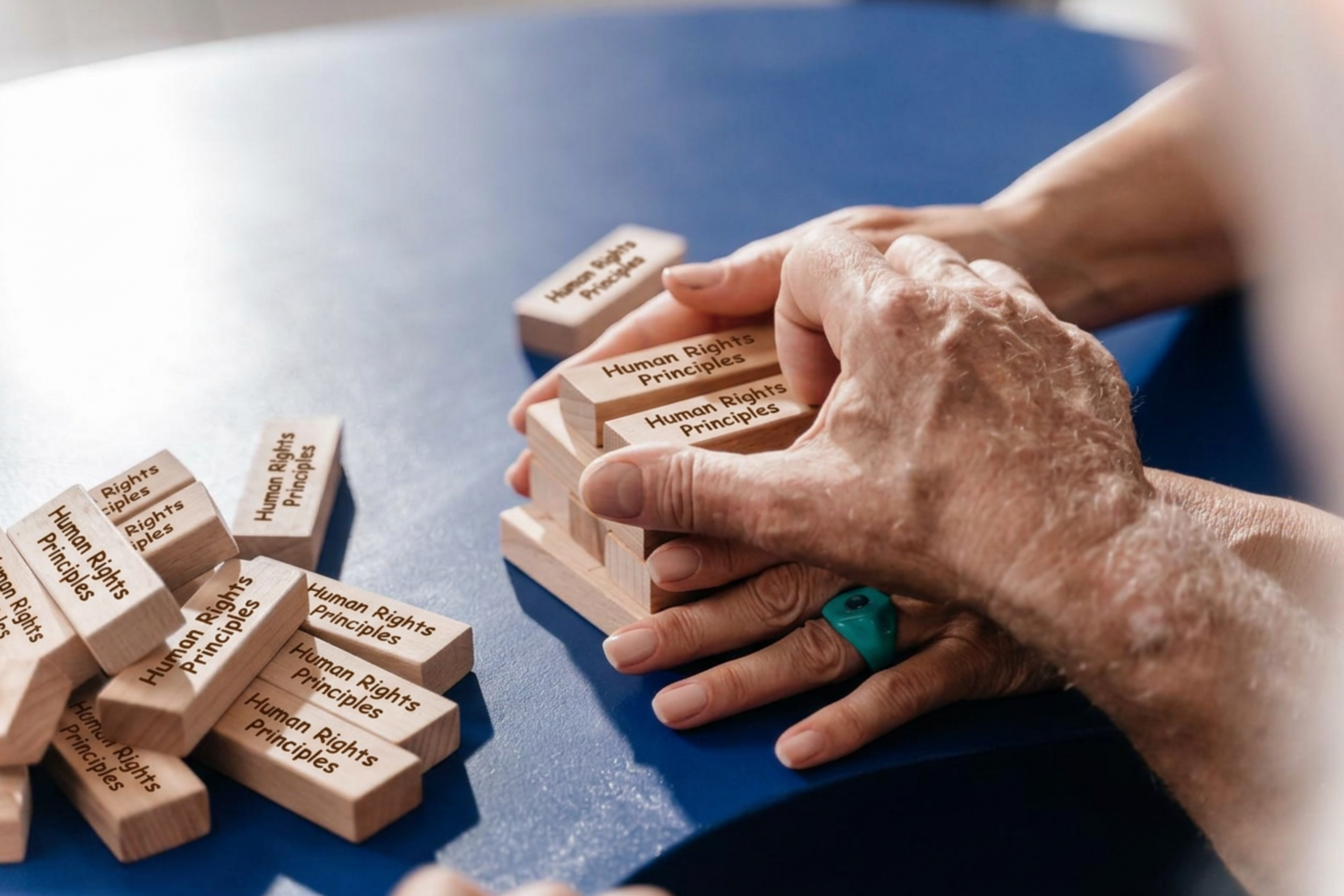
Why the principles we develop today matter for the human rights of older persons tomorrow.
When people think about older age, the conversation often focuses on decline, dependency and care needs.
But older age is also about relationships, contribution, belonging, choice and living a meaningful life.
That is why conversations about the human rights of older persons matter—and why an important discussion is now taking place internationally about the principles that should guide a United Nations Convention on the Rights of Older Persons.
What Are Human Rights Principles?
Human rights principles are the foundational values and concepts that help us understand and apply human rights. They act as a compass, guiding how laws and policies are developed and how societies respond to people’s lives and experiences.
Every major UN human rights treaty is guided by a set of principles. These principles help ensure that rights can be understood and applied in everyday life while also shaping the Convention itself. They provide the foundation upon which rights are interpreted, obligations are framed and the overall direction of the treaty is established.
As drafting begins on a Convention on the Rights of Older Persons, a fundamental question comes first: what principles should guide how the rights of older persons are framed, developed and realised in older age?
Why Are Human Rights Principles Needed for Older Persons?
Human rights principles matter because they shape how societies understand, interpret and apply rights. For older persons, they provide an opportunity to challenge the presumption that older age is mainly a time of decline, dependency or reduced social and economic value.
They shift the focus toward dignity, self-determination, contribution, belonging, security, choice and the full enjoyment of rights in older age.
Introducing the Age Knowble Human Rights Principles Framework
At Age Knowble, we believe that the development of human rights principles for older persons should begin with the realities of older age and the lived experiences of older people.
Over the past year, we have developed, tested and refined the Age Knowble Human Rights Principles Framework. It offers a practical lens for framing, interpreting and applying human rights in the context of older age and emerging issues affecting older persons.
The framework is:
- Lived experience-based
- Consultation-derived
- Validated through application
- Applied through United Nations engagement
- Enduring and future-ready
The framework recognises that older persons remain equal rights-holders throughout older age and that human rights must continue to respond to the realities of older age and longer lives.
The Eight Human Rights Principles
The framework’s eight interconnected principles form an architecture that starts with the person, moves through the lived experience of older age and finally extends to the systems and future conditions that support the realisation of rights in everyday life.
- Dignity and Equal Worth;
- Personhood and Self-Determination;
- Equality and Non-Discrimination;
- Participation and Relational Belonging;
- Protection and Security;
- Possibilities and Choice;
- Accountability and Rights-Realising Systems; and
- Future Readiness and Enduring Relevance.
Applied together, the principles provide a coherent framework for understanding and realising human rights in older age.
Read the full framework here: Age Knowble Human Rights Principles Framework
From Principles to Practice
The framework is living, applied and enduring—tested and refined through lived experience, practical application and emerging issues, and designed to remain relevant to the evolving realities of older age, both now and for future generations of older persons.
The framework first took shape through Age Knowble’s submission to the April call for input on the conceptual basis, general principles and structure of a Convention on the Rights of Older Persons and has since been further refined through submissions to the Independent Expert on human rights in situations of dependency in older age and on older persons with cognitive impairment.
These applications demonstrate how the principles can help reinterpret rights in older age and translate human rights into practical guidance for Convention standards, law, policy and practice.
Read the submissions here:
- IGWG April 2026 Call for Input
- Independent Expert June 2026 Call for Input
- Independent Expert July 2026 Call for Input
Help Shape What Comes Next
The UN Open-ended Intergovernmental Working Group on Older Persons’ Human Rights (IGWG) in Geneva is the intergovernmental forum where a United Nations Convention on the Rights of Older Persons is being developed.
Participation is possible both in person and remotely, enabling older persons and civil society organisations around the world to contribute to these important discussions. Learn more about the IGWG and the opportunities to engage.
Ultimately, this work is about ensuring that every older person can live and age with rights, dignity and self-determination, and that human rights remain relevant and responsive to the realities of older age and longer lives.
In many ways, getting the principles right is the first step toward getting the Convention right.