

The Work Begins — Reflections on the First Session of the Intergovernmental Working Group on the Human Rights of Older Persons
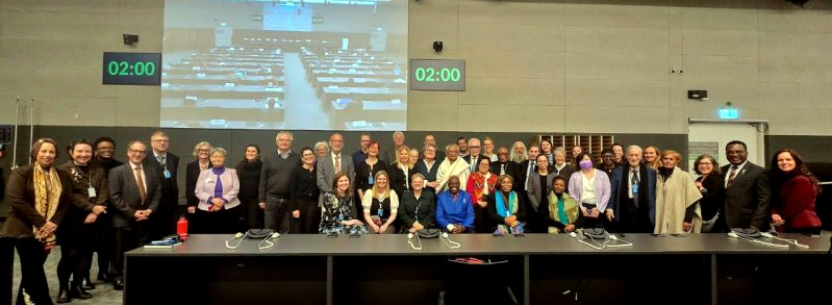
The inaugural session of the Intergovernmental Working Group on the Human Rights of Older Persons marks the beginning of a new phase in global efforts to advance the human rights of older persons.
Efforts to recognise, promote, and protect the human rights of older persons have been ongoing for many years through the work and advocacy of older persons themselves, as well as civil society organisations, national human rights institutions, governments, researchers, and international organisations. The establishment of the Intergovernmental Working Group on the Human Rights of Older Persons marks a new stage in this journey: the beginning of negotiations to elaborate an international legally binding instrument on the human rights of older persons.
In February 2026, governments, experts, national human rights institutions, and civil society gathered in Geneva for the inaugural session of the working group, convened by the United Nations Human Rights Council.
For many who have worked for years to advance the rights of older persons, the meeting marked an important milestone. It signalled the start of a new phase in the global effort to recognise, promote, and protect the human rights of older persons.
While the inaugural session focused largely on organizational matters, it offered early indications of how the process may unfold and highlighted the important role that civil society and national human rights institutions can play in shaping the work ahead.
A Shift from Justification to Design
For more than a decade, discussions have examined gaps in how existing international human rights frameworks address the realities of older persons’ lives. This work helped build the case for stronger international standards.
With the establishment of the Intergovernmental Working Group, the focus is now shifting. The central question is no longer whether a new international instrument is needed, but how it should be developed.
Early decisions about the instrument’s direction and structure will shape international human rights standards affecting older persons for decades to come.
The Importance of a Conceptual Framework
A central issue discussed during the inaugural session was the need to begin by developing a clear conceptual framework for the future instrument.
Civil society organizations, national human rights institutions, and several Member States emphasized that establishing this foundation should be an early priority for the working group. Discussion of a conceptual framework focuses on questions such as the instrument’s purpose, the principles that should underpin it, the scope, and obligations to be addressed.
As highlighted in a discussion paper prepared by the Global Alliance for the Rights of Older People, a conceptual framework can help guide the structure of a future treaty, clarify underlying principles, and support the articulation of State obligations under international human rights law.
This work is also an opportunity to reflect on the realities of a world in which people are living longer. Life in older age is already changing and will continue to evolve as longevity increases and societies adapt. A thoughtful conceptual framework can help ensure that international human rights standards remain relevant across diverse lives, longer lifespans, and changing experiences of ageing.
Participation and Inclusive Modalities
Another consistent message from the inaugural session was the importance of full and effective participation of older persons and civil society throughout the process.
Older persons, civil society organizations, and national human rights institutions at the February session highlighted the need for inclusive modalities that enable engagement from across regions and communities.
For the February session, it was welcomed news that civil society organizations without ECOSOC status could seek approval to participate. Those approved through this process, together with organizations holding ECOSOC status, were able to submit written statements, provide video interventions, and participate in person. This reflected efforts to facilitate participation beyond those able to travel.
Looking ahead, older persons, civil society organizations, and national human rights institutions who attended the session also urged hybrid participation and meaningful opportunities for older persons themselves to take part directly in the process—whether as members of national delegations or through other forms of participation.
Information on upcoming sessions and ways to engage is available through the Office of the United Nations High Commissioner for Human Rights webpage dedicated to the working group. The next two sessions are scheduled for July 2026 and October 2026.
Linking Global Dialogue with Lived Experience
As discussions begin on the conceptual framework for the future instrument, contributions grounded in lived experience are especially important.
Age Knowble has launched a global consultation inviting perspectives on the human rights principles that matter to older persons, including those living with dementia.
Learn more and participate in the consultation: Your Voice Matters: A Consultation on Human Rights Principles in Older Age – Age Knowble
Your Voice Matters
As work begins on the conceptual foundations of the future instrument, participation from older persons, civil society, and other stakeholders will remain essential.
The ideas, experiences, and perspectives shared through consultations, dialogue, and engagement across regions can help shape the principles and direction of the future instrument.
As Ambassador Carlos Mario Foradori of Argentina, Chair of the Intergovernmental Working Group on the Human Rights of Older Persons, noted in his closing message to civil society at the end of the session:
“It is clear that civil society provides the engine, the traction, and the steady force that keeps this great machine moving forward. My hope is simple, and I offer it with sincerity. Continue. Persist. Do not surrender the quiet determination that has carried you this far.”
Photo credit: Global Alliance for the Rights of Older People